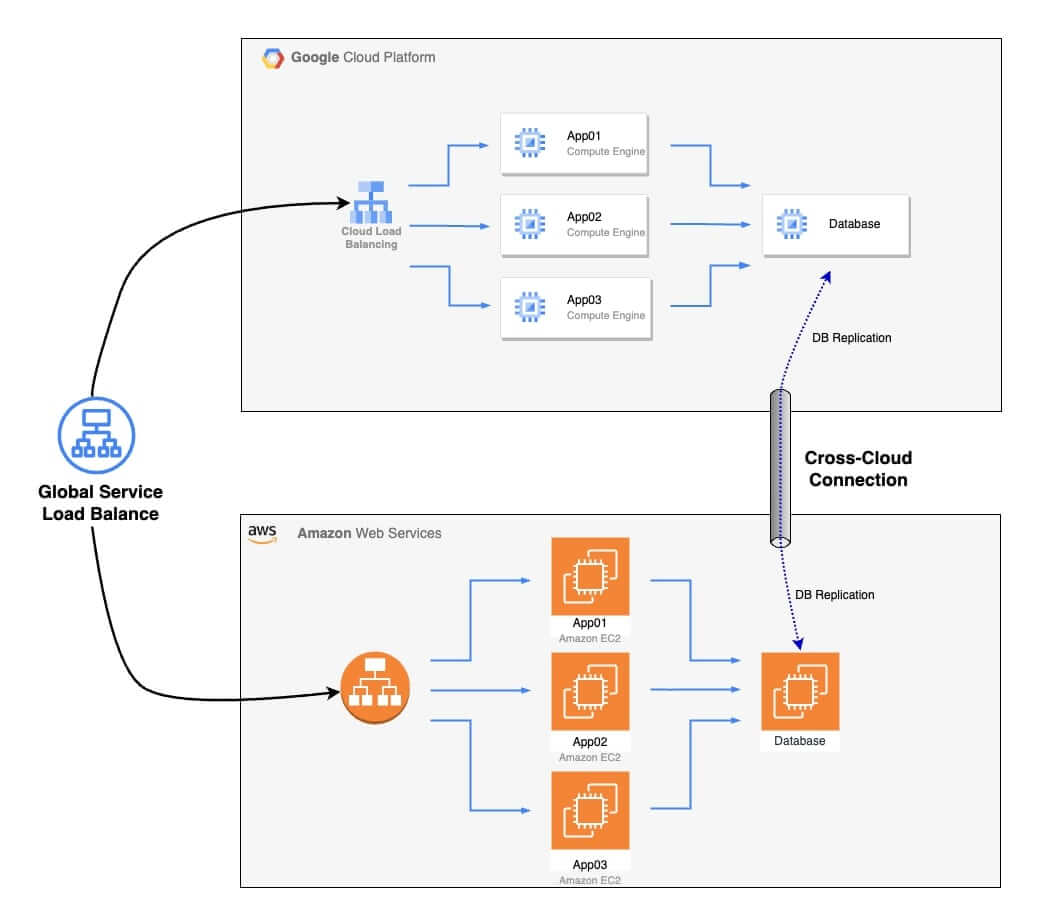
Cloud migration is nothing new — much like digital transformation, it's been unfolding for a while now as organizations chase efficiency, scalability, and innovation. But rather than leaning on a single cloud provider, organizations are increasingly recognizing the benefits of multi-cloud or cross-cloud strategies. These approaches let businesses draw on the strengths of multiple cloud platforms at once, boosting flexibility, avoiding vendor lock-in, and optimizing cost.
As the name suggests, a multi-cloud strategy lets businesses use different providers for different purposes — privacy and security protections, a wider range of application options, flexibility and reliability, avoiding lock-in, and overall cloud optimization. But what exactly is cross-cloud, how is it different from multi-cloud, and what challenges should users expect? This piece walks through these ideas, and looks at why multi-cloud management tools are critical for mastering both.
What Is Cross-Cloud?
Cross-cloud describes the practice of using multiple cloud providers to run different components of the same application or workload at the same time. It integrates services from different platforms — AWS, Azure, Google Cloud — into one unified architecture. The goal is to take advantage of each provider's individual strengths while keeping seamless interaction between the components running across those clouds.
A business might, for instance, host an application's front-end on AWS to benefit from its global reach, while relying on Google Cloud's AI and machine-learning services for back-end data processing. These pieces interact as one system, delivering better performance and flexibility together than either piece could alone.
How Cross-Cloud Differs From Multi-Cloud
At a glance, cross-cloud and multi-cloud can look similar, since both involve multiple providers. The real difference lies in how those cloud environments are integrated and managed.
In a multi-cloud strategy, businesses use different providers for different applications or services, with each cloud operating independently — a CRM on AWS and an analytics platform on Azure, say, with no integration between the two. The goal here is mainly to avoid vendor lock-in and keep flexibility without depending on one provider.
Cross-cloud takes multi-cloud a step further by actually integrating those environments. The same application can span multiple clouds, with different components interacting seamlessly — a database hosted on Google Cloud while application logic runs on AWS, both working together as part of one cohesive system.
Cross-cloud takes multi-cloud a step further by actually integrating those environments.
Three differences stand out in particular:
- Integration: cross-cloud delivers a genuinely integrated architecture that goes beyond what multi-cloud offers, letting different cloud services communicate and work together as one unified system.
- Management: multi-cloud requires managing each cloud separately, while cross-cloud requires unified management to coordinate workloads across platforms.
- Resilience and redundancy: cross-cloud offers greater redundancy by distributing workloads across providers, which can switch over automatically if one experiences downtime or failure, keeping availability high.
How Does Cross-Cloud Actually Work?
Cross-cloud computing is more than simply deploying an application on multiple platforms — it requires a coordinated approach, with several steps and tools working together to distribute workloads seamlessly across providers.
- Cloud accounts and infrastructure setup: the first step is establishing accounts with different providers and building the compute, storage, and networking infrastructure across those clouds to support the workload.
- Network configuration: effective cross-cloud architecture depends on secure, efficient networking between platforms — configurations like Virtual Private Clouds need to be consistent and interconnected so services hosted on different providers can communicate seamlessly.
- Disaster recovery for continuity: traditional disaster recovery methods often fall short as digital assets grow in both volume and complexity. Cross-cloud solutions offer a more robust, comprehensive approach — providers like AWS and Azure offer failover mechanisms that replicate data to a secondary location, keeping applications live even during an outage.
- Data synchronization and security: keeping data synchronized continuously between clouds is critical for consistency and availability. Security matters just as much, requiring encryption both at rest and in transit to prevent breaches across environments.
The Challenges of Cross-Cloud Architecture
Cross-cloud offers flexibility, performance gains, and redundancy — but it comes with its own set of challenges too, worth understanding before diving in.
- Architectural complexity: managing multiple cloud environments adds real layers of complexity. Organizations need different cloud services to communicate seamlessly while keeping performance and security high, and setting up this architecture typically demands significant expertise and planning.
- Interoperability issues: not every cloud service is fully compatible with every other. Different APIs, protocols, and configurations across providers can make it genuinely hard for applications running across clouds to interoperate smoothly.
- Data transfer and latency: moving data between platforms can introduce latency and slow performance, especially with large datasets — organizations need efficient transfer protocols and real latency optimization to protect the user experience.
- Security and compliance: each provider has its own security measures, and keeping security consistent across multiple clouds is genuinely demanding. Meeting requirements like GDPR or HIPAA gets even more complex once data is stored and processed across different geographic regions.
Simplifying Multi-Cloud and Cross-Cloud Management
As businesses continue adopting both multi-cloud and cross-cloud architectures, managing these intricate setups becomes a growing challenge — which is exactly where multi-cloud management tools become essential. An effective platform provides a centralized system for overseeing, managing, and optimizing cloud resources across every provider, streamlining the complexity that comes with both approaches.
- Unified dashboard: a single interface to monitor workloads, performance, and usage across every cloud provider.
- Cost management and optimization: track spending across platforms, analyze cost trends, and optimize resource allocation to cut unnecessary costs.
- Automated resource provisioning: automate routine tasks like scaling, backup, and disaster recovery, keeping things consistent across clouds.
- Security and compliance monitoring: enforce governance policies, monitor for vulnerabilities, and stay compliant across multiple clouds at once.
Cross-cloud architecture demands more than basic multi-cloud management — a sophisticated, genuinely easy-to-use platform becomes essential for setting up, monitoring, and maintaining these environments well. The right tool simplifies management through one integrated platform, improves security by minimizing single points of failure, supports compliance with industry standards and data-sovereignty requirements, optimizes costs through centralized billing controls, and enhances scalability as cloud needs grow.
Cross-Cloud Management Made Easy With MQloud
As cloud technology keeps evolving, cross-cloud architecture is becoming the next natural phase for businesses already running multi-cloud strategies. It brings more flexibility and performance, but it adds complexity too, making management genuinely harder. This is exactly where a platform like MQloud earns its place — by simplifying cross-cloud management, we help organizations streamline operations, strengthen security, and control costs across every provider, unlocking the full value of their cloud investment.